community-based, non-corporate, participatory media
Number of Iraq, Afghanistan misconduct cases climb to at least 91
by Agence France Presse
Tuesday, Jun. 01, 2004 at 6:07 PM
An army official admitted that it was "likely" that the total was higher, noting that cases were difficult to track because commanders can conduct investigations without reporting them up the chain of command.
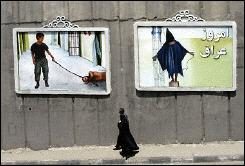
Channel News Asia, June 2, 2004
WASHINGTON : The number of cases of misconduct by US soldiers against detainees and civilians in Iraq and Afghanistan now numbers at least 91, and is likely higher, an army official said. The new figure is nearly double the 49 cases of abuse disclosed two weeks ago by senior Pentagon officials.
It is a blow to the administration's efforts to portray the highly publicized abuse cases at Abu Ghraib prison as an isolated case.
US commanders have opened 91 investigations into misconduct by US soldiers against detainees and civilians, an army official said, confirming a report on the higher number by The Washington Post. But the official cautioned that that tally was about two weeks old, and the army's Criminal Investigation Command was still gathering information on the outstanding investigations.
It was "likely" that the total was higher, the official said, noting that cases were difficult to track because commanders can conduct investigations without reporting them up the chain of command.
Senior army officials on May 22 told reporters that 37 death cases and 16 assault cases have been investigated since August of 2002. Of the death cases, only nine were under active investigation. The latest numbers do not appear to include any new deaths, but rather more assault cases than previouly reported and cases of alleged theft by soldiers.
The Post said they included 18 cases of soldiers accused of stealing jewelry, money or other property from civilians, and 40 cases of assault in which civilians or detainees were kicked or beaten, or weapons were fired to frighten them. Most cases -- 49 -- involved incidents outside detention centers.
The newspaper cited a senior army official as saying the assault cases led to 14 courts martial and seven instances in which non-judicial punishment was meted out.
Only one homicide has resulted in disciplinary action: a soldier was demoted and discharged for shooting a prisoner who was throwing stones at him. Eight other suspected homicides are under active investigation and a ninth has been turned over to the Justice Department because it involved a CIA contract employee.
Meanwhile, an investigation into the role of military intelligence at Abu Ghraib continues under the army's deputy chief of staff for intelligence, Major General George Fay. Fay is to submit his report to Lieutenant General Ricardo Sanchez, the commander of US forces in Iraq, no later than June 15, a second army official said.
So far, only seven military police guards have been charged in the abuses at Abu Ghraib which were documented in hundreds of photographs and video clips that showed prisoners being sexually humiliated and physically tormented. Most of the guards have alleged they were urged by military intelligence interrogators to soften up the prisoners, who were supposed to enjoy Geneva Convention protections against inhumane and degrading treatment.
A key question is whether more aggressive interrogation techniques used on al-Qaeda suspects in Afghanistan and at a detention center in Guantanamo Bay, Cuba were imported to Iraq. The abuses occurred between October and December after a visit by Major General Geoffrey Miller, who was then the commander of the Guantanamo detention center and is now in charge of US-run prisons in Iraq.
Miller was sent to Iraq to see how to improve intelligence collection from detainees, and recommended closer coordination between military intelligence and military police to set conditions for successful interrogations at Abu Ghraib.
The New York Times reported over the weekend that interrogation teams were sent from Guantanamo to Iraq and played a central role in training military intelligence interrogators at Abu Ghraib during the period when the abuses occurred.
www.channelnewsasia.com/stories/afp_world/view/88000/1/.html
