community-based, non-corporate, participatory media
Non-Animal Testing Award Named After Former Pitt Dean
by Michael Croland
Tuesday, Aug. 23, 2005 at 7:45 PM
mcroland@gmail.com
Non-Animal Testing Award Named After Former Pitt Dean Pitt Research Today a Minefield of Animal Welfare Violations
The first-ever Herb Rozenkranz Award for the Advancement of Non-Animal Methods in Toxicology was given today to Dr. Gilman Veith at the Fifth World Congress on Alternatives and Animal Use in the Life Sciences in Berlin, Germany. Dr. Veith is receiving a $120,000 grant for his pioneering work with QSAR technology, which could largely replace the use of animals in chemical testing.
The award was named after the late Herb Rosenkranz, the former dean of the University of Pittsburgh’s School of Public Health. Dr. Rosenkranz was widely respected both for his leadership in the field of computational toxicology and for his compassionate commitment to non-animal research. He criticized the use of animal testing for both scientific and ethical reasons.
“Dr. Rosenkranz was not only a leader in the scientific community, he was also a good friend to animals,” said Troy Seidle, science policy advisor for PETA, the organization that gave the award. “[W]e hope that this award will be an incentive for others in the scientific community to move away from outdated, ineffective, and cruel animal testing as quickly as possible.”
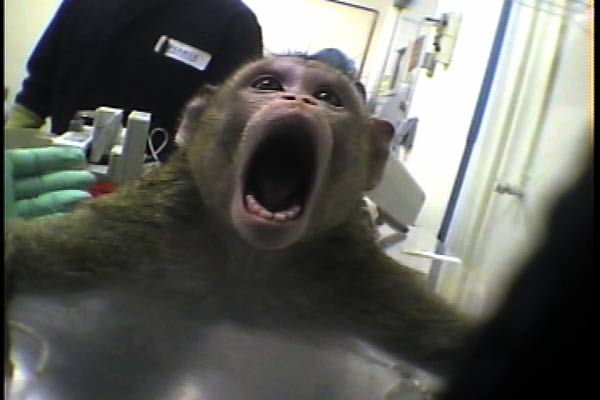
Contrary to Rosenkranz’s legacy, Pitt’s research programs are an absolute horror-show for animals. A recent survey showed that Pitt conducts experiments on more than two thousand animals. Last year, Cincinnati-based Stop Animal Exploitation Now (SAEN) placed Pitt in its “10 Most Wanted” list of Animal Welfare Act violators, for its 27 violations of the federal law in a three-year period.
Pitt’s violations included inappropriate storage of food, use of expired drugs, and dirty air vents. One U.S. Department of Agriculture (USDA) inspection found experimenters had failed to recognize “rudimentary signs of dehydration” in four primates. Others noted unnecessary isolation of healthy primates and the housing of 35-inch primates in 32-inch cages.
“If you count the little violations, 27 is not a number that concerns me at all, considering there are 1,000 people working on these things,” said Pitt’s Vice Chancellor of Research Conduct and Compliance Randy Juhl in The Pitt News. But wouldn’t just one be too many? As 95% of Pitt’s research animals are rodents or fish, who are not accounted for nor protected by the Animal Welfare Act, there are probably many other inadequate conditions that should concern him.
As Dr. Rosenkranz’s kind legacy is honored, may the University of Pittsburgh embrace his wisdom and abandon its cruel and unnecessary research programs that exploit animals.
For more information about the flaws of animal testing and the scientific merits of humane alternatives, please visit http://www.StopAnimalTests.com. To learn more about Pitt’s animal welfare violations, see: http://www.All-Creatures.org/SAEN.
| TITLE | AUTHOR | DATE |
|---|---|---|
| HHHEEEEEELPP !! | 3035389223 | Tuesday, Sep. 13, 2005 at 8:46 PM |
| Post-Gazette follow-up | Michael Croland | Tuesday, Sep. 13, 2005 at 6:15 PM |
| mmm | an animal lover | Wednesday, Aug. 24, 2005 at 1:48 AM |
