community-based, non-corporate, participatory media
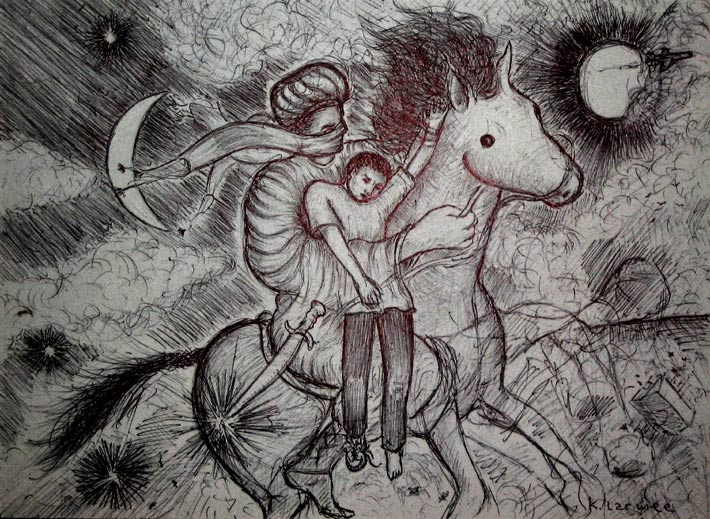
ART OF WAR: Dreams of Muhammad
by Larmee
Friday, Nov. 14, 2003 at 9:35 PM
IN MEMORY OF THE PALESTINIAN BOYS KILLED BY ISRAEL. These Palestinian boys were gunned down, often by Israeli snipers from fortified positions, that picked them out of the crowd, using high power rifles with telescopic lenses and silencers, who shot these boys in the heart, in the head. They were among the more than 140 Palestinians who were killed during the first month the intifada; killed before there were any suicide bombings in Israel, killed for daring to throw rocks at Israeli tanks, killed for wanting their FREEDOM!
.
DREAMS OF MUHAMMAD
.
DEDICATED TO: Peace Now, Not in My Name, Btselem, Gush Shalom, Rabbis for
Human Rights, and all the good Israelis (over 100,000 recently met in Rabin Square) and
Jews around world who want peace, who want an end to the killing, who want an end to
the Israeli occupation of Palestine.
.
Muhammad Jamal Muhammad al-Dureh, age 12, from Al-Bureij Refugee Camp,
killed by Israeli security forces live gunfire to the abdomen and chest at Nazarim
Junction/ Gaza.
Khaled 'Adli al-Baziyan, age 15, from Nablus, killed by Israeli security forces live
gunfire to the head in Nablus/ The West Bank.
Nizar Mahmud 'Abd al-'Ayedeh, age 16, from Deir 'Ammar/ Ramallah, killed by Israeli
security forces gunfire to the chest in Ramallah/ The West Bank.
'Iyyad Ahmad al-Khashashi, age 16, from Nablus, killed by Israeli security forces live
gunfire in Nablus/ The West Bank
Samer Samir Sudki Tabanjeh, age 12, from Nablus, killed by Israeli security forces live
gunfire in Nablus/ The West Bank
Sami Fathi Muhammad a-Taramsi, age 17, from Ash Sheikh Raduan, Gaza, killed by
Israeli security forces live gunfire to the chest and back in Gaza.
Husam Na'im Hassan Bakhit, age 17, from Refugee Camp Balata, killed by Israeli
security forces live gunfire to the head in Nablus/ The West Bank.
Muhammad Nabil 'Ali Hamed Dahud al-'Abasi, age 16, from Al Bira, killed by Israeli
security forces gunfire to the head in Al-Bira/ The West Bank
Wa'il Taysir Qatawi, age 16, from Refugee Camp Balata, killed by Israeli security
forces live gunfire to the chest in Nablus/ The West Bank
Husam 'Ali Mahmud al-Hamshari, age 15, from Tulkarm, killed by Israeli security
forces gunfire to the head in Tulkarm/ The West Bank
Muhammad Yusef Za'id Abu 'Iasi, age 12, from Bani Suheila, Khan Yunis, Gaza,
killed by Israeli security forces live gunfire to the chest and back at Nezarim Junction/
Gaza
Majdi Samir Mussa Masalmani, age 15, from Beit Hanina, killed by Israeli security
forces gunfire to the heart in East Jerusalem/ The West Bank
Yusef Dib Khalef, age 17, from Al-Bureij Refugee Camp, died from injuries sustained 7
Oct. 2000 by Israeli security forces live gunfire to the head in Gaza
Sami Hussein Saalim Salami Salameh, age 17, from Tulkarm, killed by Israeli security
forces gunfire to the chest in Tulkarm
Sami Fathi Abu Jazar, age 12, from Rafah, died from injuries sustained 10 Oct. 2000 by
Israeli security forces live gunfire to the head in Khan Yunis/ Gaza strip
Moayed Osama 'Abed Ali Jawarish, age 14, from Ayda Refugee Camp , killed by
Israeli security forces gunfire to the abdomen in Bethlehem
Tha'ar 'Ali Dahud/ 'Omar Mu'aleh, age 17, from al-Am'ari Refugee Camp, killed by
Israeli security forces gunfire to the head in Ramallah.
Muhammad 'Adel Hassan Abu Tahuna, age 17, from Tulkarm, killed by Israeli
security forces gunfire to the chest in Tulkarm.
Samer Talal al-'Awisi, age 15, from Qalqilya, killed by Israeli security forces gunfire to
the head in Qalqilya.
'Ala Bassem 'Abdullah Bani Namreh, age 13, from Salfit, killed by Israeli security
forces gunfire to the heart in Salfit.
'Omar 'Isma'il/Omar al-Buheisi, age 16, from Deir Al Balah, killed by Israeli security
forces live gunfire to the chest in Kafr Darom.
Majid Ibrahm Hassan Hawamdeh, age 15, from At Tira, killed by Israeli security
forces gunfire to the head in Al-Bira
Wa'al Mahmud 'Imad A-Nashit, age 12, from Jabalyah Refugee Camp, killed by Israeli
security forces rubber coated metal bullet to the head at Erez Checkpoint.
Salah Fawzi al-Nizam, age 15, from Al-Maghazi Refugee Camp, killed by Israeli
security forces live gunfire to the heart in Kafr Darom/Deir El-Balah
Ashraf Ahmad 'Abd al-Majid Habeib, age 15, from 'Askar Refugee Camp, died from
injuries sustained 16 Oct. 2000 by Israeli security forces gunfire to the head in 'Askar
Refugee Camp, Nablus.
Sa'ad 'Adnan 'Abdullah al-Tanbur, age 17, from Nablus, died from injuries sustained
20 Oct. 2000 by Israeli security forces gunfire to the head in Kafr Qalil/ Nablus.
Nidal Muhammad Zohadi al-Dabeiqi, age 17, from A Darj, Gaza, killed by Israeli
security forces live gunfire to the abdomen at Erez.
'Iyyad Osama Sha'ath, age 14, from Khan Yunis, died from injuries sustained 21 Oct.
2000 by Israeli security forces live gunfire to the head in Khan Yunis
Dream of Muhammad
by Hamas
Saturday, Nov. 15, 2003 at 5:10 AM
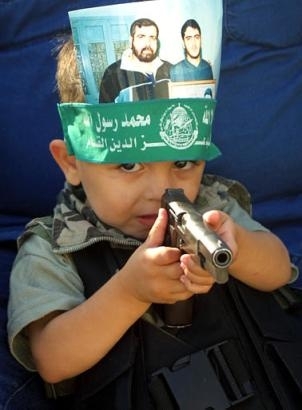
Dream on, of great muhammad
by Hamas
Saturday, Nov. 15, 2003 at 5:11 AM
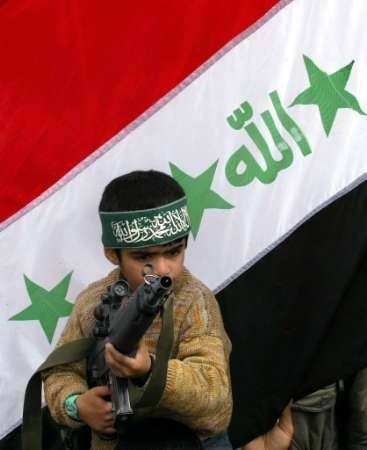
Muhammad the Nightmare Lives
by Hamas
Saturday, Nov. 15, 2003 at 5:13 AM
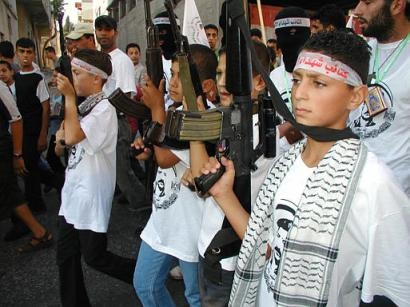
Muhammad is no Dream
by Hamas
Saturday, Nov. 15, 2003 at 5:14 AM
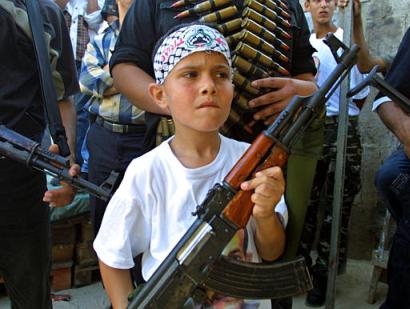
Not Sharon's Hamas?
by Blowback
Sunday, Nov. 16, 2003 at 5:40 AM
ISRAEL GAVE MAJOR AID TO HAMAS
Saturday, 24 February 2001 11:28 (ET)
By RICHARD SALE, Terrorism Correspondent
NEW YORK, Feb. 24 (UPI) --
Israeli Prime Minister Ariel Sharon, speaking of the Islamic Resistance Movement Hamas recently described it as "the deadliest terrorist group that we have ever had to face." Active in Gaza and the West Bank Hamas wants to liberate all of Palestine and establish a radical Islamic state in place of Israel. It has gained notoriety with its assassinations, car bombs and other acts of terrorism.
But Sharon had left something out. Israel and Hamas may currently be locked in deadly combat, but, according to several current and former U.S. intelligence officials, beginning in the late 1970s, Tel Aviv gave direct and indirect financial aid to Hamas over a period of years.
Israel "aided Hamas directly -- the Israelis wanted to use it as a counterbalance to the PLO�, said Tony Cordesman, Middle East analyst for the Center for Strategic Studies. Israel's support for Hamas "was a direct attempt to divide and dilute support for a strong, secular PLO by using a competing religious alternative�, said a former senior CIA official.
According to documents obtained from the Israel-based Institute for Counter Terrorism (ICT) by UPI, Hamas evolved from cells of the Muslim Brotherhood, founded in Egypt in 1928. Islamic movements in Israel and Palestine were "weak and dormant" until after the 1967 Six Day War in which Israel scored a stunning victory over its Arab enemies.
After 1967, a great part of the success of the Hamas/Muslim Brotherhood was due to their activities among the refugees of the Gaza Strip. The cornerstone of the Islamic movements success was an impressive social, religious, educational and cultural infrastructure, called Da'wah, that worked to ease the hardship of large numbers of Palestinian refugees, confined to camps, and many of whom were living on the edge.
"Social influence grew into political influence," first in the Gaza Strip, then on the West Bank, said an administration official who spoke on condition of anonymity. According to ICT papers, Hamas was legally registered in Israel in 1978 by Sheikh Ahmed Yassin, the movements spiritual leader, as an Islamic Association by the name Al-Mujamma Al Islami, which widened its base of supporters and sympathizers by religious propaganda and social work.
Funds for the movement came from the oil-producing states and directly and indirectly from Israel, according to U.S. intelligence officials. The PLO was secular and leftist and promoted Palestinian nationalism. Hamas wanted set up a transnational state under the rule of Islam, much like Khomeini's Iran. What took Israeli leaders by surprise was the way the Islamic movements began to surge after the Iranian revolution, after armed resistance to Israel sprang up in southern Lebanon organized by an Iran-backed movement called Hezbollah that bore similitaries to Hamas, these sources said.
"Nothing stirs up the energy for imitation as much as success," commented one administration expert. A further factor of Hamas' growth was the fact the PLO moved its base of operations to Beirut in the 1980s, leaving the Islamic movements to strengthen their influence in the Occupied Territories "as the court of last resort," he said. When the intifada began, the Israeli leadership was further surprised when Islamic groups began to surge in membership and strength. Hamas immediately grew in numbers and violence. The group had always embraced the doctrine of armed struggle, but the doctrine had not been practiced and Islamic groups had not been subjected to suppression the way groups like Fatah had been, according to U.S. government officials.
But with the triumph of the Khomeini revolution in Iran, with the birth of Iranian-backed Hezbollah terrorism in Lebanon, Hamas began to gain strength in Gaza and then in the West Bank, relying on terror to resist the Israeli occupation. Israel was certainly funding the group at that time. One US intelligence source who asked not to be named, said that not only was Hamas being funded as a "counterweight" to the PLO, Israeli aid had a more devious purpose: "to help identify and channel towards Israeli agents Hamas members who were dangerous terrorists."
In addition, by infiltrating Hamas, Israeli informers could listen to debates on policy and identify Hamas members who "were dangerous > hardliners," the official said. In the end, as Hamas set up a very comprehensive counterintelligence system, many collaborators with Israel were weeded out and shot. Violent acts of terrorism became the central tenet, and Hamas, unlike the PLO, was unwilling to compromise in any way with Israel, refusing to acknowledge its very existence.
Even then, some in Israel saw some benefits to be had in trying to continue to give Hamas support: "The thinking on the part of some of the right-wing Israeli establishment was that Hamas and the other groups, if they gained control, would refuse to have anything to do with the peace process and would torpedo any agreements put in place," said a U.S. government official.
"Israel would still be the only democracy in the region for the United States to deal with," he said. All of which is viewed with disapproval by some former U.S. intelligence officials. "The thing wrong with so many Israeli operations is that they try to be too sexy," said former CIA official Vincent Cannestraro. Former State Department counter-terrorism official Larry Johnson told UPI: "The Israelis are their own worst enemies when it comes to fighting terrorism. They are like a guy who sets fire to his hair and then tries to put it out by hitting it with a hammer. They do more to incite and sustain terrorism than curb it."
Aid to Hamas may have looked clever, "but it was hardly designed to help smooth the waters," he said. "It gives weight to President George W Bush's remark about there being a crisis in education." Cordesman said that a similar attempt by Egyptian intelligence to fund Egypt's fundamentalists had also come to grief because of over complication.
An Israeli Embassy defense official, asked if Israel had given aid to Hamas replied: "I am not able to answer that question. I was in Lebanon commanding a unit at the time, besides it is not my field of interest." Asked to confirm a report by U.S. officials that Brigadier General Yithaq Segev, the military governor of Gaza, had told U.S. officials that he had helped fund "Islamic movements as a counterweight to the PLO and communists," the Israeli official said he could confirm only that he believed that Segev had served back in 1986. The Israeli Embassy press office referred UPI to its Web site.
Copyright 2001 by United Press International. > All rights reserved.
